Written-first communication
Key assumptions, scope, approvals and decisions stay documented. A discovery call is not compulsory.
The approach
Start with the product and buying context. Keep the paid message, destination, measurement and decision connected.
The QuantFuze method
Start with the product. Keep the buyer’s question, the paid message and the evidence connected.
Understand the use case, compatibility and trade-offs.
Find the practical question behind the comparison.
Choose an eligible route and a relevant message.
Answer the question and support the next action.
Read the outcome and decide what follows.
Illustrative buyer question
“Will this work with my setup?” A useful message connects that question to product information the buyer can check.
Identify what the product does, who it is useful for and which specifications, compatibility needs and limitations shape the decision.
Find the relevant use cases, comparisons and trade-offs. Keep the message specific enough to explain why the product is useful in that situation.
Review platform fit, account eligibility, market, destination and measurement. A named AI environment does not automatically justify media spend.
The landing route should support the promise made in the ad and make the agreed next action usable.
Agree one product focus, primary market, outcome, budget authority and review period. Change only what the test and scope justify.
Compare delivery and conversion signals with the deepest reliable outcome. Explain uncertainty and decide whether to continue, retest, fix or stop.
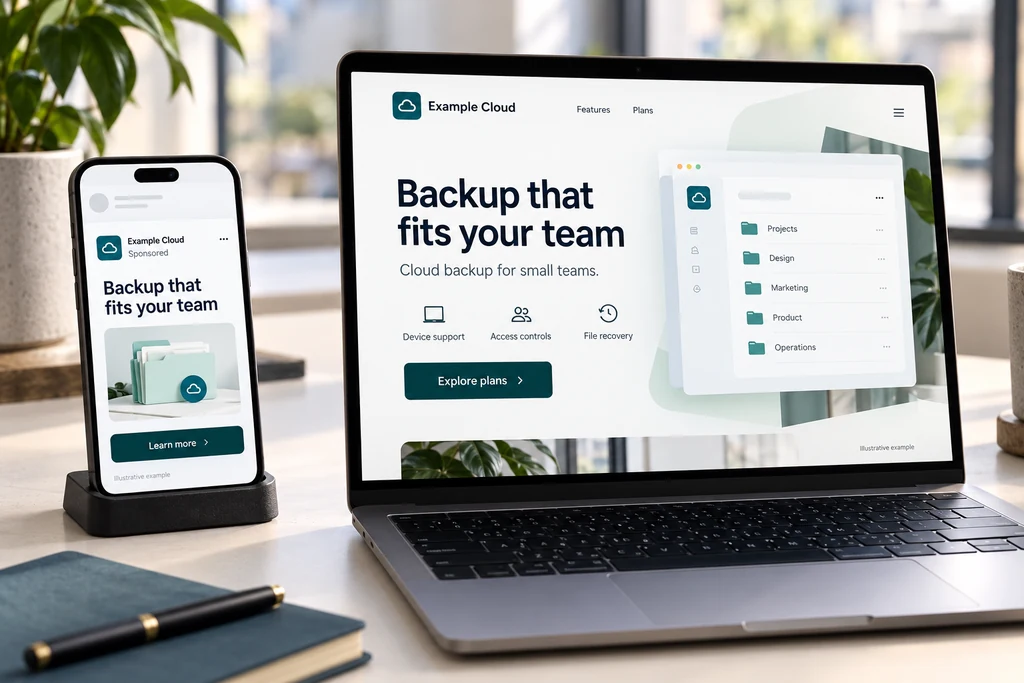
An illustrative buying question
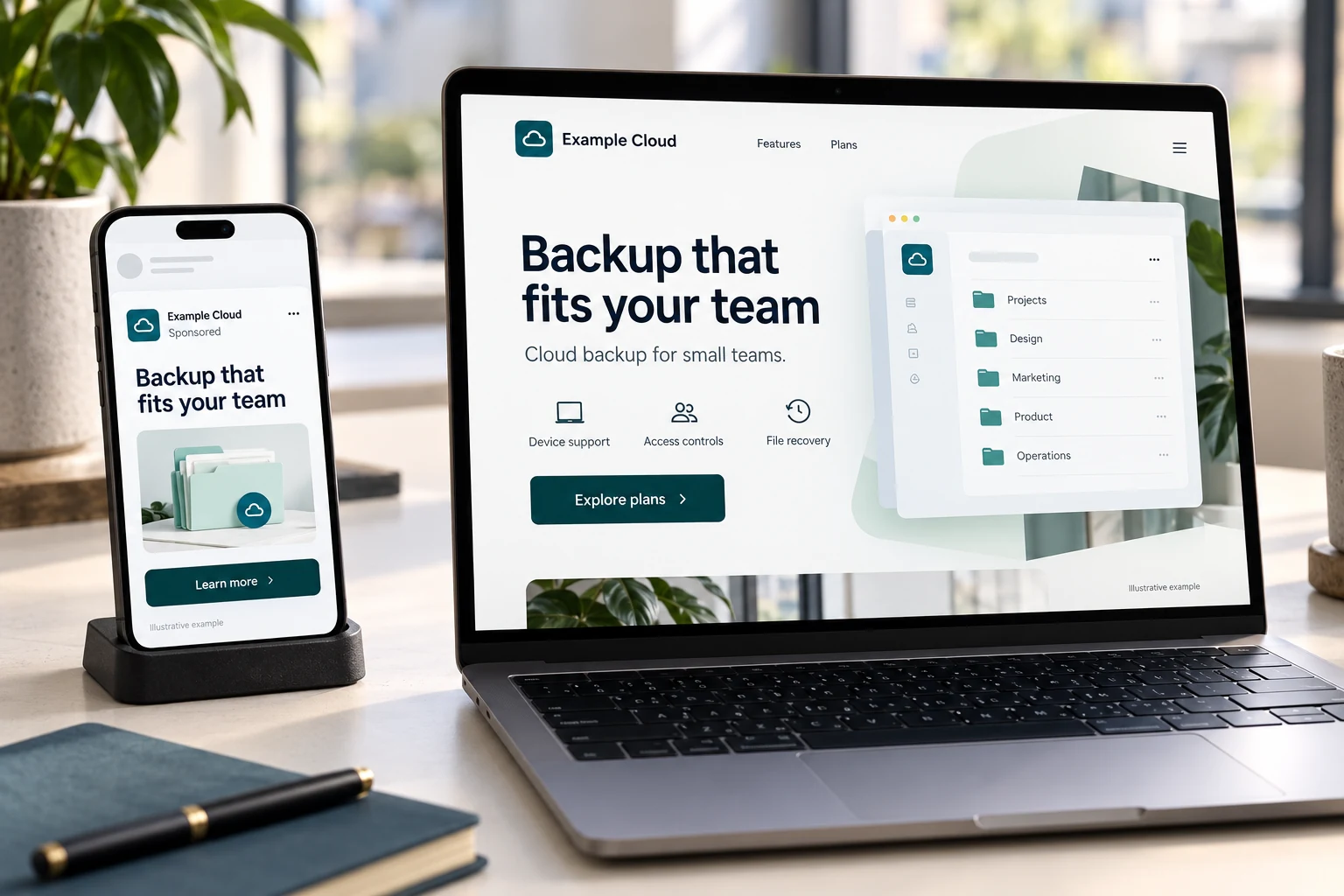
For cloud-backup software, device support, access controls and recovery options shape the choice. A relevant ad should lead to a product page where the buyer can check those details.
The same discipline applies to hardware: make compatibility and limitations clear before asking someone to buy. The next action should reflect the product’s actual buying journey.
This is a methodology illustration, not a client case or performance claim.
How the relationship works
Key assumptions, scope, approvals and decisions stay documented. A discovery call is not compulsory.
Public evidence comes first. Where execution requires account access, use the role and permissions appropriate to the agreed work.
Another product, market, language, conversion path or platform is an acquisition-scope decision, not an invisible addition.
A useful first conversation
Share the product, primary market and the action you want buyers to take. We’ll establish fit before proposing the work.