Commerce
Read purchase evidence against acquisition cost and product economics. Returns, cancellations and the observable attribution window can change the interpretation.
Measurement
A campaign needs a credible outcome source and a clear explanation of what can be concluded from it.
Follow the business model
From reporting to a decision
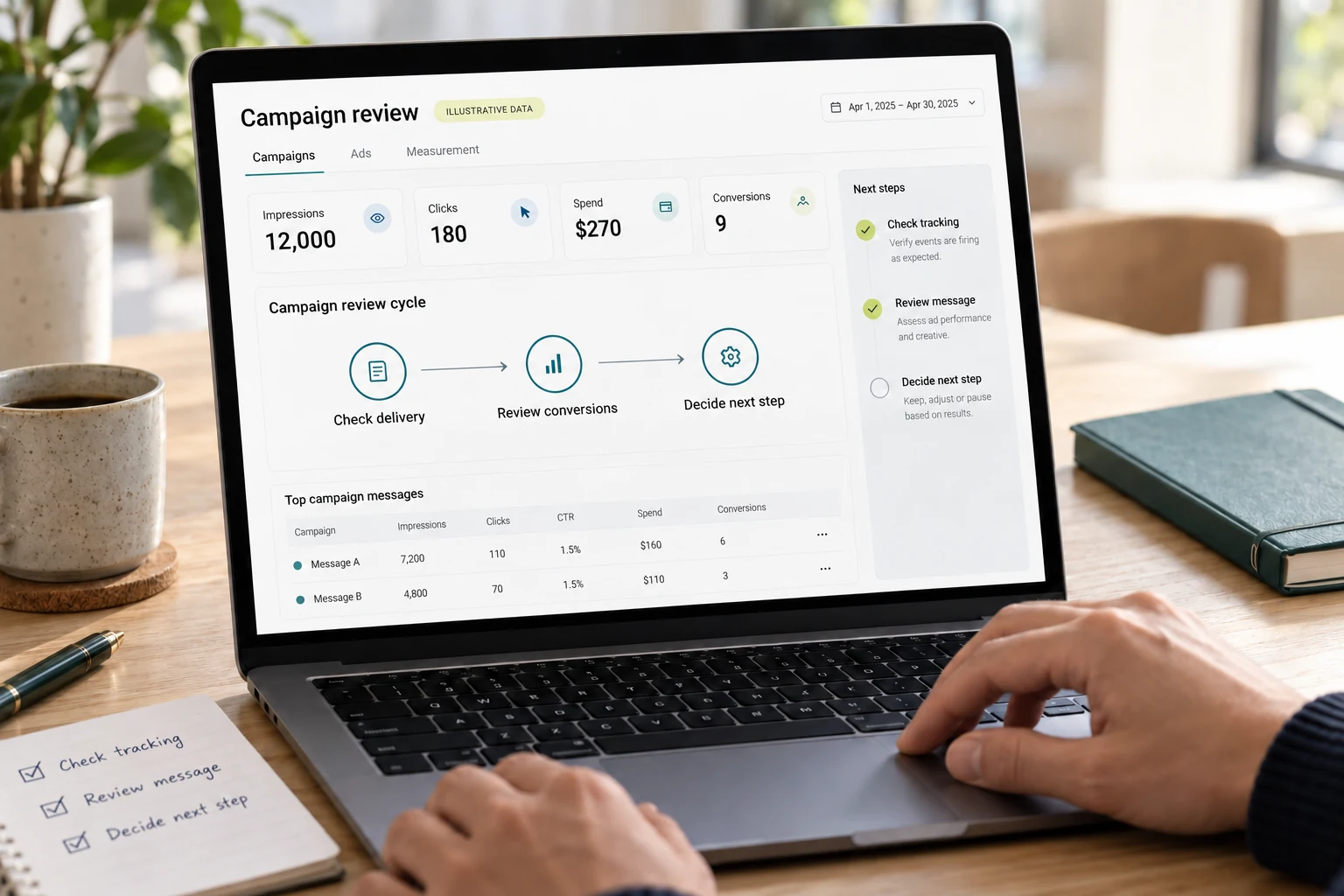
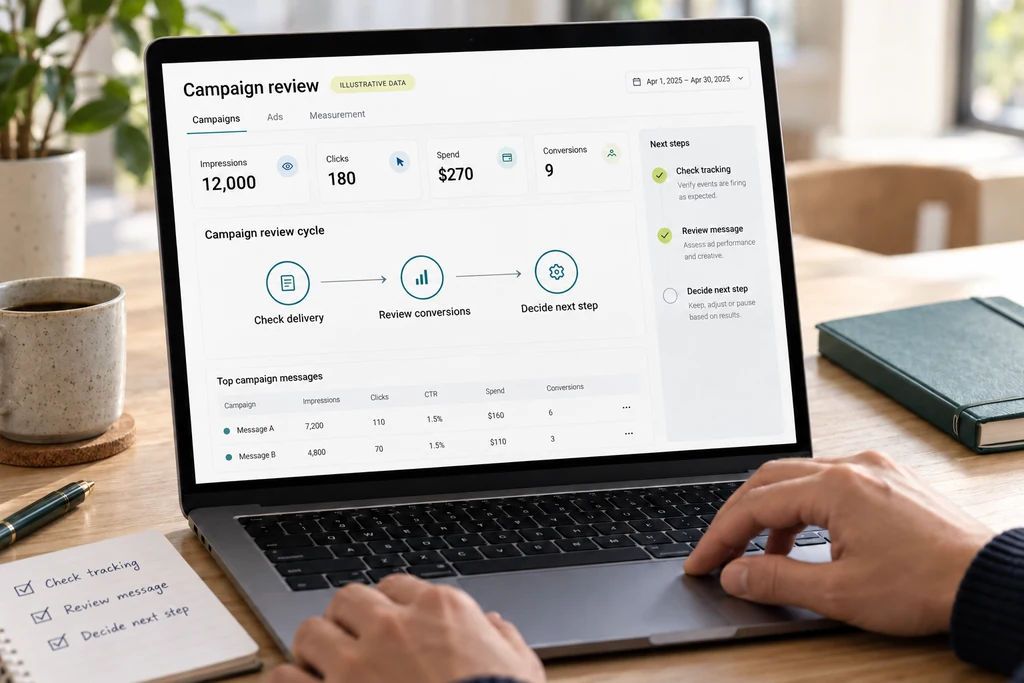
Review impressions, clicks and spend, then compare conversion evidence with store or product records. Decide whether to continue, adjust or stop.
Commerce
Self-service software
Illustrative paths. The actual events and available evidence depend on the product. Attribution alone does not prove incremental growth.
Read purchase evidence against acquisition cost and product economics. Returns, cancellations and the observable attribution window can change the interpretation.
Separate a low-friction account creation from a meaningful use event and eventual paid conversion. Use the actual product journey rather than an assumed funnel.
Where the route is suitable, assess qualification and downstream progress in the available CRM or business record. Allow for the sales cycle and the limits of observation.
Three questions for the evidence
Choose the primary commercial action and the system that records it: a store, product system, subscription record or CRM.
Understand whether paid-source evidence can be connected to that outcome. Missing attribution, consent or handoff detail must be surfaced.
Read the advertising report alongside available business records. Account for duplicates, lag, quality and scope limitations.
A platform may attribute an action to an ad. That alone does not show the action would not have happened without advertising.
Measurement readiness
A particular analytics tool is not a universal prerequisite. The question is whether the available evidence can support this test’s decision. GA4 alone does not establish correct attribution; a store or product record may be useful even when the tracking stack is simpler.
If measurement is too weak, the right next step may be a fix, a narrower question or no launch. Diagnose identifies requirements. Tracking engineering and full system rebuilds are separately scoped work.
Assess measurement readinessA useful first conversation
Share the product, primary market and the action you want buyers to take. We’ll establish fit before proposing the work.